


#HISTORICALRAILROADSIGNAL, #PENNSYLVANIARAILROAD, #OHIO, #RAILROADJUNCTION, #OLDRAILROADSIGNAL

👍FACEBOOK US! / hotrailproductions
🔵 TWEET US! / csxproductions
📙OUR BLOGGER! https://www.hotrailproductions.biz/
🟦OUR TUMBLR PAGE! https://www.tumblr.com/hotrailproductions
💵CONTRIBUTE VIA PAYPAL! https://www.paypal.com/cgi-bin/webscr?cmd=_s-xclick& ============================================================================== 💲RAILROAD INVESTMENTS💲:
💰 https://get.stash.com/markd8uyn 💰
💰 https://join.robinhood.com/marke833 💰
📸DSLR Alternatives https://geni.us/DLSRAlternate
🌞Solar Charger! https://geni.us/nvGYL
📱➡️📸Turn Your Phone Into A Camera! https://geni.us/PhoneCameraConver ============================================================================= 📺 How to Get More Video Views on Youtube!
🟥GET AMAZING FREE Tools For Your Youtube Channel To Get More Views: Tubebuddy (For GROWTH on Youtube): https://www.tubebuddy.com/MR77100
At dusk, a westbound Canadian National train crosses the new OWLS diamond with the former NKP IMC line at Stillwell, Indiana. Power is a GEVO and leased Tier 4. The IMC line is now owned by the South Shore and is used to access the Kingsbury Industrial complex south of here off a piece of the former Wabash mainline.
OUR CN PLAYLIST ▶️https://youtube.com/playlist?list=PLaBqtxbEoDQZijhVBLUVIrGRGXa7OIZMR&si=eK8I6efmdDoHCdeH
1ST VIDEO ON CN PLAYLIST▶️https://youtu.be/inrvaCI3XGs?si=RmEg6EnCYjxhxnLf&t=7 Click here to see the South Shore local at Dillon in 2000: https://youtu.be/U5vE2Sg-8tQ
🏆OUR PATREON! https://www.patreon.com/HOTRAILPRODUCTIONS456
📼 OUR VIDEOS! https://www.youtube.com/@HOTRAILProductions/videos
🚗 🧳 Travel Accessories Kit! https://kit.co/MR77100/travel-accessories
📸 📽 Vlogging Kits! https://kit.co/MR77100/vlogging-kits
📹 🎥 📽 Video Camera Kits! https://kit.co/MR77100/video-cameras
📷GoPros! https://geni.us/DYX4HPf 🚗Dash Cam for Road Trips! https://geni.us/dashcamu
🔭 Scope For Train-spotting! https://geni.us/starscope 🗺️ Railroad Atlases! https://geni.us/rratlas
#GEVOLOCOMOTIVE
#TIER4LOCOMOTIVE
#TIER4GEVOLOCOMOTIVE
#GRANDTRUNKWESTERN
#RAILROADCROSSING
#RAILROADJUNCTION
 / hotrailproductions
 🔵 TWEET US!  / csxproductions
📙OUR BLOGGER! https://www.hotrailproductions.biz/ ============================================================================== 💲RAILROAD INVESTMENTS💲
: 💰 https://get.stash.com/markd8uyn 💰
💰 https://join.robinhood.com/marke833 💰
CP's SD70ACU painted in the heritage scheme leads a unit tank train east on the CSX Garrett Sub at Wellsboro, Indiana. A BNSF C44-9W is shoving on the rear. =========================================================
🎞 GoPro Hero 10! https://geni.us/OobP9b9
📸GoPro 360 MAX! https://geni.us/GoPro360
🔭 Scope For Train-spotting! https://geni.us/starscope
🗺️ Railroad Atlases! https://geni.us/rratlas
📶Smart Phone Stabilizer! https://geni.us/PhoneStabilizer

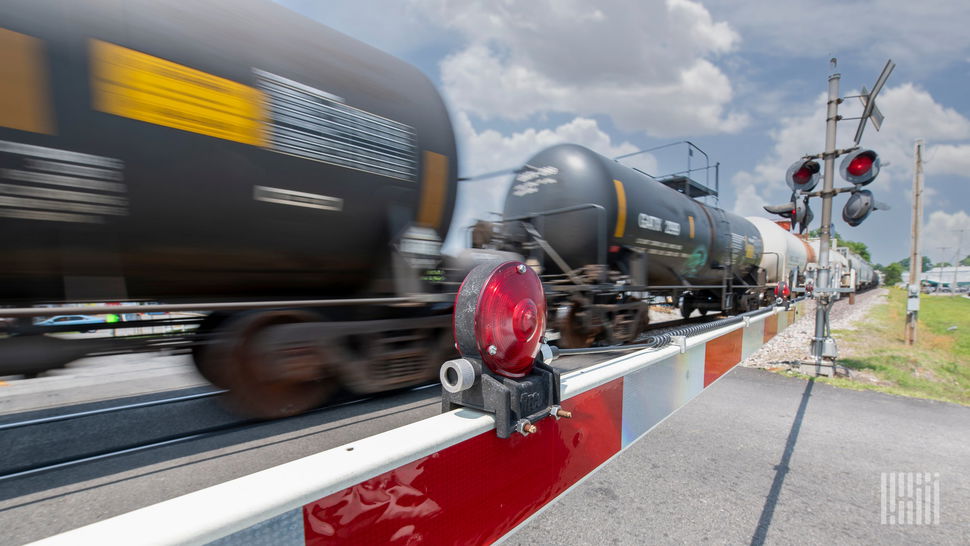

The American chemicals industry, the third largest customer of the Class I railroads, has come out hard against the proposed merger between Union Pacific and Norfolk Southern.
Chemicals industry lobbyists told FreightWaves in an interview that the burden of proof is on Union Pacific and Norfolk Southern to show how the merger would not only not degrade, but positively enhance competitiveness. Chemicals shippers are concerned that increases in transportation costs due to monopolistic consolidation in the railroad industry will harm their ability to compete in a global marketplace, potentially suppressing American chemicals exports.
The industry, represented by leaders from the American Chemistry Council (ACC), has articulated their concerns in a direct appeal to the Trump Administration, emphasizing the detrimental impact such a merger would have on U.S. manufacturing competitiveness and the broader economy.
The ACC’s letter to President Trump highlights the critical role that the chemical industry plays in the U.S. economy, underscoring its contribution of over $633 billion annually and support of more than 550,000 jobs. The industry is a key pillar of manufacturing, providing essential materials across various sectors, from national defense to infrastructure development. The materials that Americans use in our daily lives, from fuel to clothing, from food to machinery, are made out of chemicals industry products.
Among the notable companies whose executives signed the letter are heavyweights such as Cabot Corporation, Huntsman Corporation, and The Lubrizol Corporation, alongside CEOs from over thirty other leading firms in the chemical industry. The coalition argues that past rail mergers have historically led to negative outcomes, including increased service disruptions, higher rates, and weakened supply chains.
The letter raises concerns about the current state of the U.S. freight rail system, which is dominated by seven Class I freight railroads controlling a vast majority of rail traffic. The chemical industry executives warn that consolidating UP and NS could exacerbate existing issues, further reducing competition and choices for rail customers.
Looking at a network map of Union Pacific and Norfolk Southern, there’s a region of significant overlap in the Midwest, a triangular nexus between Kansas City, Chicago, and St. Louis. Chemical shippers in that region with a choice between the two railroads would lose their choice and be ‘captive’ to a single railroad, which could then wield monopolistic pricing power while allowing service to degrade.
But as officials from the ACC explained, it’s not just the shippers in that specific region of network overlap that would lose their competitive choices in the market—any transcontinental shipper moving freight on the Union Pacific would have additional transportation options once their shipments reach the Mississippi River. Presumably, they could choose either the Norfolk Southern or CSX. Merging the Union Pacific and Norfolk Southern would remove that choice, the ACC argued, giving the combined entity a monopoly over a much greater geographic area.
Chris Jahn, President and CEO of the American Chemistry Council, echoed these concerns, stating, “We need more rail competition, not less. Every single merger in the past has been anywhere from a mini disaster to a major disaster.” Jeff Sloan, Senior Director of Regulatory Affairs at the ACC, highlighted the importance of keeping competitive options open, noting how past mergers like CPKC led to a meltdown in service and increased costs for businesses reliant on timely rail deliveries.
Previous mergers, such as the one between Canadian Pacific and Kansas City Southern, have demonstrated tangible setbacks. Despite regulatory safeguards, integration troubles led to significant delays and additional costs for chemical companies, which had to resort to expensive emergency trucking to fulfill customer orders.
The proposed UP-NS merger threatens to centralize control further in the rail industry. With Union Pacific already issuing embargoes at ten times the rate of its peers post-COVID-19, the merger could likely lead to fewer competitive routes and higher costs for shippers. Jahn warned that losing routing options, particularly for firms located near current UP lines, could severely impact the competitive landscape and escalate national freight costs.
Concerns from the ACC are not without precedent. Past mergers in the 1990s, particularly involving Union Pacific and Southern Pacific, resulted in severe service meltdowns which reverberated through industries reliant on freight rail. In response, the Surface Transportation Board (STB) implemented stricter guidelines requiring mergers to enhance competition, not merely preserve it.
Jahn said that chemical shippers like the interline intermodal service agreement that BNSF and CSX is working on, and argued that it was a better model for seamless coast-to-coast transportation from the customers’ perspective.
In their letter, the chemical executives urged President Trump and the STB to maintain a high bar for merger approval, insisting that any deal should unequivocally demonstrate enhancements in service, safety, and competition before being greenlighted.
“The burden of proof is on UP and NS to prove that this merger will enhance competition, improve service, and be in the public interest,” stated Scott Jensen, Director of Issue Communications at the ACC.
While formal paperwork for the UP – NS merger has not yet been presented to the Surface Transportation Board, the chemicals industry is already working on a set of demands that the merger must meet. One of them is an ambitious expansion of ‘reciprocal switching’. Under current rules, if a shipper terminal is captive to a single railroad provider, but another railroad provider has road a short distance away, the shipper’s only railroad provider is required to transfer the freight to the competing railroad shipper’s network on request.
The ACC would like to see this concept extended across the network—not just near terminals, but at any point in a shipment’s lifecycle. The concept is relatively simple: the combined entity of Union Pacific and Norfolk Southern must transfer their customers’ freight to nearby competing rail networks upon request. That’s one example of the kind of concession the chemicals industry expects the STB to impose on any deal, but they expect to play a significant role in the conversation around the merger once official DOT regulatory processes move into action.
As the proposed merger moves forward, all eyes will be on the STB to uphold stringent reviews, ensuring that Class I railroads empower rather than strangle American industrial capacity.

“Integration challenges have historically caused ripple effects across the national network, even for customers not directly served by the merging railroads. When UP was challenged during the supply chain crisis, they issued more than 1,000 embargoes, causing competitive and financial harm to many customers and invited STB intervention.” – BNSF EVP and CMO Tom G. Williams. BNSF photo
Though Union Pacific and Norfolk Southern have yet to file their formal merger application with the Surface Transportation Board, kicking off a process expected to take up to 18 months, the other four Class I railroads are getting a head start exercising their vocal cords in opposition. BNSF has produced one of the strongest public responses we’ve seen thus far.
Following Warren Buffett’s pronouncement that Berkshire Hathaway, parent company of BNSF Railway, is not interested in merging with CSX (a development that contributed to CSX President and CEO Joe Hinrich’s firing), BNSF Executive Vice President and Chief Marketing Officer Tom G. Williams fired off a Sept. 29 Customer Notification urging shippers to oppose UP+NS and “tell the STB to say no to unchecked market power and the loss of competitive options that you’ll never get back.” Williams’ letter provides customers a detailed “step-by-step” guide, “Preserve Rail Competition,” on how the merger process works, and how to file comments with the STB and/or raise concerns “confidentially” with the U.S. Department of Justice, among other measures. As well, “if you would prefer not to file the letter yourself, we can file it for you,” BNSF said, proving an email link, MessageUs@BNSF.com.
Williams outlined several points in his letter:
A strongly worded position paper (download below) was attached to the letter. Among its points:
“BNSF is not looking to create a national duopoly,” the position paper noted. “BNSF doesn’t believe the appropriate competitive response is for BNSF to acquire CSX at this time. We should not be viewed as the fix to correct the competitive imbalance that UP [and] NS are trying to create. Wall Street and UP would like to force BNSF into a competing merger that creates a coast-to-coast duopoly controlling [more than] 90% of our nation’s rail traffic.”
The operative words are “at this time.” It’s widely understood that if the UP+NS transaction is approved, BNSF will be forced into a position to do something—and CSX will be a willing partner under newly-minted President and CEO Steve Angel. Joe Hinrichs was let go primarily for one reason: He opposed immediately pursuing a combination with either BNSF or CPKC—both of which said, “not interested.” Activist investor Ancora, whose CSX holdings are miniscule, has been the public voice calling for CSX to seek a merger partner, attacking Hinrichs and calling for his ouster. The actual hedge funds that pressured CSX’s Board, Sachem Head Capital Management and Elliott Management, prefer to remain quiet, according to my source.
Most railroaders know very little about Angel, 70, beyond that he is highly skilled at merging large companies and worked for General Electric’s locomotive business unit many years ago. According to CSX’s Sept. 26, 2025 SEC 8-K filing, Angel, when CEO of industrial gases company Linde AG from 2018 to 2022, “oversaw the successful integration of Linde AG and Praxair, Inc., which created the world’s largest industrial gases and engineering company.” Prior to its merger with Linde, Angel served as Praxair Chairman, President and CEO from 2007 to 2018, “helping guide Praxair through significant transformation while identifying and pursuing strategic growth initiatives.”
Though not specifically mentioned in the 8-K, Angel’s CSX compensation package is directly tied to his successfully executing a merger with another Class I to form a U.S. transcontinental, provided the UP+NS marriage is approved. Presumably, CSX’s partner will be BNSF.
“In connection with his appointment as CEO and President, [CSX Corporation] and Mr. Angel have entered into an employment letter, dated Sept. 26, 2025 … under which Mr. Angel will receive an initial annual base salary of $1.5 million and will have an initial annual target bonus opportunity under the Company’s Management Incentive Compensation Plan of 175% of base salary,” CSX’s 8-K said. “In addition, Mr. Angel will receive a Sign-On Equity Award under the Company’s 2019 Stock and Incentive Award Plan having a grant date target value of $10 million comprised (i) 50% of performance share units that will be eligible to be earned based on the achievement of performance criteria applicable to the Company’s 2025-2027 long-term incentive program, and any units that are earned will vest and become payable on the third anniversary of his employment start date, and (ii) 50% of stock options that will cliff vest on the third anniversary of Mr. Angel’s start date and will have an exercise price equal to the closing price per share of CSX common stock on the grant date and a seven-year term. Beginning in 2026, Mr. Angel will be eligible to receive an annual Long Term Incentive Award under the Company’s long-term incentive plans on a substantially similar basis as other similarly situated executives of the Company, with the initial grant to be made in 2026 having a grant date target value of $13.5 million. The Company will also provide Mr. Angel with corporate housing in Jacksonville, Fla., will reimburse Mr. Angel for up to $100,000 in non-refundable expenses incurred by him for personal trips cancelled in 2025, and will provide up to $200,000 per year for his personal use of the corporate aircraft.”
Not a bad deal, eh? But if it were me, I’d prefer the CSX executive train. Much nicer than a tin can with wings, right?

BNSF Railway has publicly rebuked the proposed $85 billion merger between Union Pacific and Norfolk Southern, calling on customers to air any grievances they may have with the deal to the Surface Transportation Board (STB).
On Sept. 26, the STB invited public commentary on its impending review of the acquisition, which would create the first U.S. transcontinental railroad. The deadline for comments is Oct. 16.
More from Sourcing Journal
CSX Replaces CEO Amid Merger Pressure from Activist Investor
Carriers Slash Sailings Ahead of Golden Week, as Premier Alliance Expects 20% Capacity Cut
Typhoon Ragasa, Golden Week Push China-Europe Air Freight Rates Up
“No customer is asking for a UP-NS merger to happen. It’s driven by Wall Street on the promise of a big shareholder payout,” the company said in a position paper posted on its website. “BNSF does not believe a merger is necessary at this time, when we can deliver immediate benefits to our customers while preserving competition.”
In the paper, BNSF highlighted that a merger of Union Pacific and Norfolk Southern would control 45 percent of existing freight, citing STB metrics that also indicated that the combined company would move 46 percent of containers and have 43 percent market share of total carload volumes. The combined companies would cover more than 50 percent of market share across categories including chemicals, metals and lumber.
Carload and agricultural products customers will be most impacted, the Fort Worth, Texas-based railroad said, claiming that they will lose optionality in shipping to the eastern U.S. or “face significantly higher rates on traffic” that currently interchanges with Norfolk Southern.
“Post-merger, some lucky customers will still have two rail options—a single-line UP service and a BNSF-CSX option,” the railroad said, highlighting the Warren Buffett-owned railroad’s recent partnership. “For many shippers and for many origination and destination pairs, however, there will be no BNSF-CSX option because they are served only by UP or NS at origin or destination who have no incentive or obligation to facilitate alternative routes, creating a new generation of captive shippers.”
Union Pacific CEO Jim Vena has defended the deal, citing that companies like CSX and Canadian National Railway have already had their own tie-ups in an attempt to match the efficiency of a potential single-system railroad.
Despite an activist investor’s prodding of CSX to examine a merger with BNSF as a counter to the Union Pacific-Norfolk Southern transaction, the Berkshire Hathaway subsidiary has been intent that it does not want to explore such a deal. According to the STB’s data, a BNSF-CSX merger would put the combined firm on roughly equal footing when it came to share of carloads and containers.
BNSF went after Union Pacific’s claims that the merger would be paid for through 10 percent volume growth within three years of the deal’s closing, calling the target unachievable. The Class I railroad said that UP’s last mega-merger with Southern Pacific Transportation in 1996 resulted in a reduction in volumes, along with an increase in their revenue per unit and record profits.
“Less competition means fewer alternatives and higher rates, as well as reduced capital investments across the rail industry,” BNSF stated.
In a separate letter to BNSF customers on Monday, executive vice president and chief marketing officer Tom Williams highlighted concerns about possible service disruptions.
“Integration challenges have historically caused ripple effects across the national network, even for customers not directly served by the merging railroads,” said Williams. “When UP was challenged during the supply chain crisis, they issued over 1,000 embargoes causing competitive and financial harm to many customers and invited STB intervention.”
And if a merger is approved, BNSF claims 300 intermodal lanes across the U.S. will be eliminated, based on the assumption that all current UP-CSX and BNSF-NS lanes will be shuttered.
Union Pacific has denied those claims, calling them “absolutely false,” and saying that more than 100 shippers have written letters in support of the merger.
The STB has traditionally not considered approving railroad mergers of this magnitude. But the Trump administration’s public support of a Union Pacific-Norfolk Southern acquisition, and September’s STB shakeup including the firing of an STB board member and a new nominee, could suggest a more favorable opinion from the regulatory body.
For the next steps in the merger process, Union Pacific and Norfolk Southern will file their merger application to the STB between Oct. 29 and Jan. 29.
Any initial concerns about the completeness of the UP/NS application should be filed quickly, BNSF told customers, “ideally within one to two weeks after the application is filed.”
The STB will either approve or reject the proposal within 30 days of its submission. If approved, the board would begin conducting its review. This would evaluate how the pending Class I transaction, which would create the first single U.S. transcontinental railroad, would enhance competition.
#NSUPMERGER, #NORFOLKSOUTHERNUNIONPACIFICMERGER, #RAILROADMERGEROPPOSITION
In August, 1998, we visited Wellsboro, Indiana, to find that CSX had done some housecleaning, much to the disgust of railfans. CSX's e...


.png)