Step onto the captivating world of Hotrail Productions, where the magic of lights, camera, and trains combines to create an unforgettable experience. I travel all over the country photographing railroad history in the making. My footage dates back to 1995. Whether it's a thrilling action sequence or a heartwarming romantic scene, the railway has long been a favorite setting for filmmakers and TV producers.
Things were hot at Wellsboro today! Two Canadian National freights meet at the diamonds. This was the second meet I filmed on this trip. "Celebrate! Celebrate! Dance to the railfan music!"
Take a brief walk through the railroad park and historic junction at Deshler, Ohio—long known as The Crossroads of the Baltimore & Ohio. Once a major hub of rail activity, the site remains a favorite among railfans, even as the iconic depot was sadly demolished just weeks before this visit.
Watch an eastbound Norfolk Southern container train roll through Wawaka, Indiana as it thunders across Albion Street on the legendary former New York Central mainline—famously known as “The Water Level Route.” 🚂
Power on the point is a striking mix of old and new: a pair of rebuilt GE C44-9W AC units flanking a modern Tier 4 GEVO, delivering intermodal freight with authority. Adding to the scene are the remaining vintage telephone poles lining the right-of-way, a nostalgic detail that continues to make this location a favorite among railroad photographers.
A perfect blend of history, horsepower, and small-town railroading—this is modern Norfolk Southern action on a classic American mainline.
Norfolk Southern Container Train Thunder Across Albion Street | Water Level Route
Historic NYC Mainline in Action: Norfolk Southern Freight Powers Through Wawaka
C44-9Ws + GEVO Lead Norfolk Southern Container Train on Small-Town Street
Modern Norfolk Southern Meets Classic NYC Route | Railfan Must-See!
Jim Vena says growth targets and UP-Norfolk Southern merger benefits exceeded initial estimates
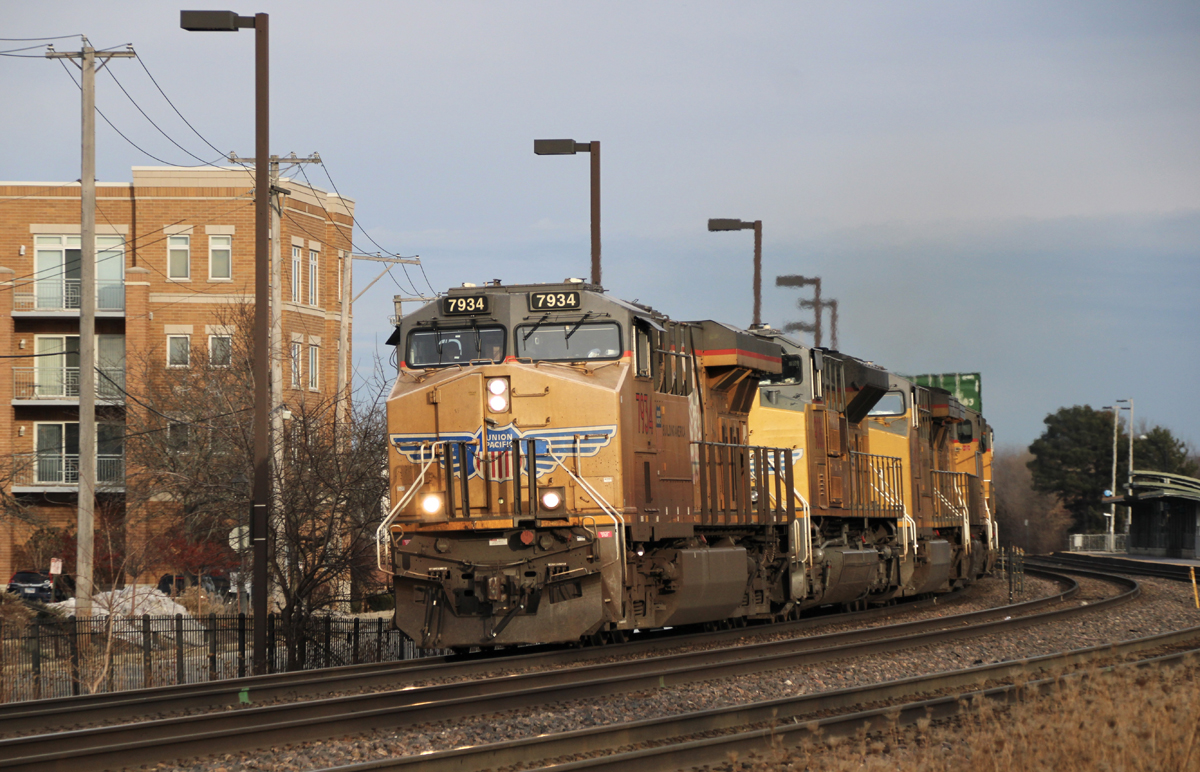
Five locomotives power a westbound Union Pacific stack train at Lombard, Ill., on Dec. 20, 2025. David Lassen
OMAHA, Neb. — The 6,692-page merger application that Union Pacific
and Norfolk Southern submitted to federal regulators last week
underscores the benefits of the first U.S. transcontinental merger, UP
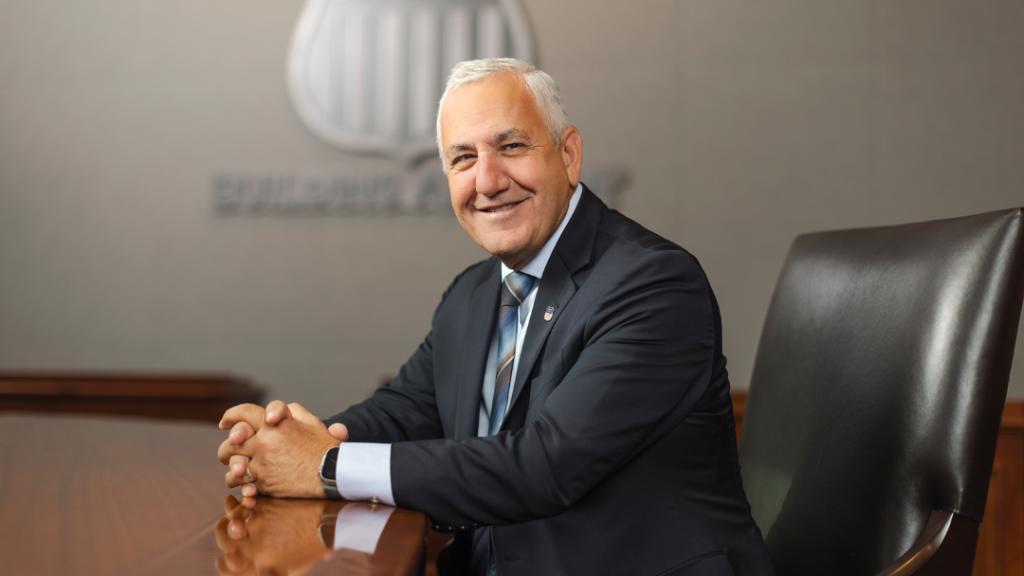
CEO Jim Vena says.
Vena came to Union Pacific as CEO in August 2023 with a transcon
merger on his to-do list — and has touted the UP-NS combination as a win
for customers, employees, the nation, and the economy.
Vena read every page of the application. “What popped out was
actually the strength of what’s possible for customers … with this
combined railroad,” he says. “It really popped out.”
The experts UP and NS hired to delve into the growth potential of a
railroad that can provide seamless, coast-to-coast service projected
that within three years the combined system will take 2 million trucks
off the highway annually and, in the process, bring 1.4 new million
intermodal loads and 425,000 carloads to the expanded Union Pacific.
Those figures, Vena says, exceed the expectations that UP and NS had
while in merger talks earlier this year. “When the experts looked at it …
they showed us how it’s even better than what we thought,” he says.
Overall, the railroads are projecting 11% growth by year three of the
merger, compared to the combined UP-NS traffic from the base year of
2023.
The application points out that interline merchandise traffic moving
between 1,000 and 1,500 miles costs customers an average of 35% more
than a comparable move involving just one railroad.
“What people miss is those handoffs — those times that you move
traffic from one railroad to the other — cost you time and money,” Vena
says.
The merger application includes 2,000 letters of support, some 500 of
them from railroad customers. But BNSF Railway, Canadian National, and
Canadian Pacific Kansas City oppose the UP-NS combo, saying it’s not
necessary, will hurt rail competition, and runs the risk of widespread
integration-related service failures.
BNSF last month asked the Surface Transportation Board to review
Union Pacific’s compliance with conditions that the board imposed to
preserve competition after UP’s 1996 acquisition of Southern Pacific.
BNSF argues that UP has sought to block its right to access customers
who were once served by both UP and SP. [See “BNSF asks STB to review…,” Trains.com, Dec. 1, 2025]
If the STB were to take up the case, it would put UP in the awkward
position of simultaneously arguing that the UP-NS merger enhances
competition while also having to defend itself against allegations that
it has engaged in anticompetitive behavior related to its last big
merger.
Vena finds it hard to believe that the STB would opt to reopen a deal
that was decided nearly three decades ago. “It’s just not gonna
happen,” he says.
“I think it’s a tactic that they’re using,” Vena says of BNSF. “The facts aren’t there.”
Any railroad, Vena says, can go to the STB and say UP is not living up to its promises to maintain competition.
“And people have done that,” he says, noting that BNSF failed to
convince the STB that it should be able to access a pair of UP-served
quarries. BNSF has asked the board to reconsider in light of additional
information it dug up related to the quarries it wants to serve in Texas
and Arkansas. [See “BNSF questions Union Pacific’s compliance…,” Trains.com, Nov. 25, 2025.]
By and large, UP and BNSF get along well, Vena says. “Most things we
agree on. We operate railroads together. We operate terminals together …
And we do that every day,” he says. “And then, once in a while, we
disagree with what some agreement said.”
Vena expected that other Class I railroads would oppose the UP-NS
merger. “They know competitively they have a competitor that’s going to
be able to provide a high level of service at a better price,” he says.
Rival railroads will have to drop their rates in order to compete
with UP, Vena contends. “I feel sorry for them — and not,” he says.
Other railroads are free to seek their own mergers, Vena says. “They
can afford it, especially Berkshire,” he says of BNSF owner Berkshire
Hathaway, which has a cash stockpile of around $350 billion.
But Berkshire Hathaway Chairman Warren Buffett has said the company is not interested in pursuing a rail merger.
The STB is reviewing the UP-NS merger to ensure that it satisfies
regulatory requirements. Once the application is accepted, the board
will review the $85 billion deal under tougher rules adopted in 2001,
which require mergers to enhance competition and be in the public
interest.
These images were taken on May 25, 2023 at Hanna, Indiana, and document the mock-up PRR Position Light Signal that replaced the original eastbound home signal. This was the Pennsylvania Railroad's Chicago-Pittsburgh mainline that was once double-track and featured over 100 trains a day! Now it has been truncated to a single-track dark railroad that is owned by CSX and leased to G&W. This signal guards the diamond with former C&O (Perre Marquette) branch line from Wellsboro to La Crosse, which is now owned by Indiana Boxcar,
The transcontinental railroad will produce a one-time surge in volume, but won’t fix the industry’s underlying growth struggle
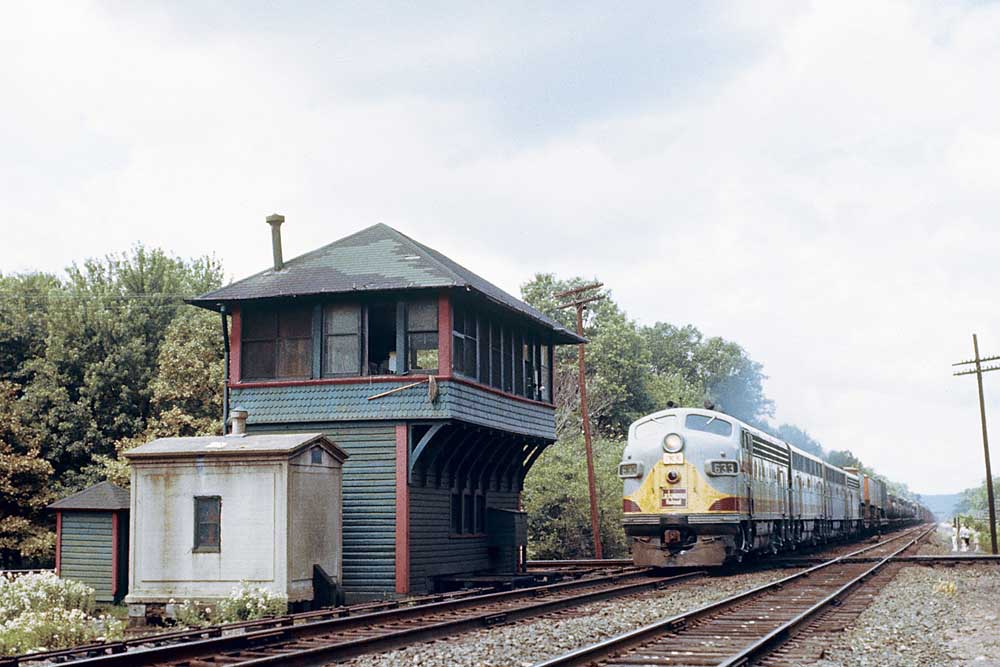
The
1960 merger of the Erie and Delaware, Lackawanna & Western staved
off the inevitable bankruptcy for more than a decade. At Mountain View,
N.J., a tower guarded the crossing of Lackawanna’s double-track Boonton
Line and Erie’s 32-mile Greenwood Lake Division. Hot DL&W freight
NE-4 hits the diamond behind A-B-B-A Fs led by F7A 633. Jack Emerick
Back in the day when railroads were squeezed under the thumb of the
Interstate Commerce Commission and saddled with money-losing passenger
service and dying branch lines, Class I railroads went through merger
after merger to fend off financial collapse.
The goal of those combinations was to eliminate duplicate routes,
yards, shops, and headquarters in the hopes of remaining in the black.
They were mergers born from failure. And they worked, for a time.
Now along comes Union Pacific decades later with its proposed $85
billion acquisition of Norfolk Southern. No one would call either
railroad a failure.
UP was the most profitable railroad last year, hauling in $24.3
billion in revenue, $9.7 billion in operating income, and returning $4.7
billion to shareholders through a combination of dividends and share
buybacks. If anything, it’s an embarrassment of riches under CEO Jim
Vena, who has lit a fire under a long-slumbering franchise.
NS is on the comeback trail after
its disastrous 2023 hazardous materials derailment in East Palestine,
Ohio. Last year it beat back an activist investor, eased broader safety
concerns, and weathered the departure of its chief executive under a
cloud of scandal. Even after all this, NS in 2024 generated $4.1 billion
in operating income on revenue of $12.1 billion.
And yet UP+NS is born from failure, too. No, it’s not a failure to
turn a profit. It’s a failure to effectively compete with trucks. The
railroads said as much in their preliminary proxy filing this week.
“The Norfolk Southern board … discussed industry trends and the
difficulty Norfolk Southern and the industry has had, and risked
continuing to have, in achieving significant growth on a standalone
basis, including due to lower volumes because of truck market
penetration, and the potential for a transcontinental merger to break
through these challenges,” the regulatory filing says.
It’s an admission that Class I growth strategies have not borne fruit
— and that they view a merger as the only way to win back freight from
the highway.
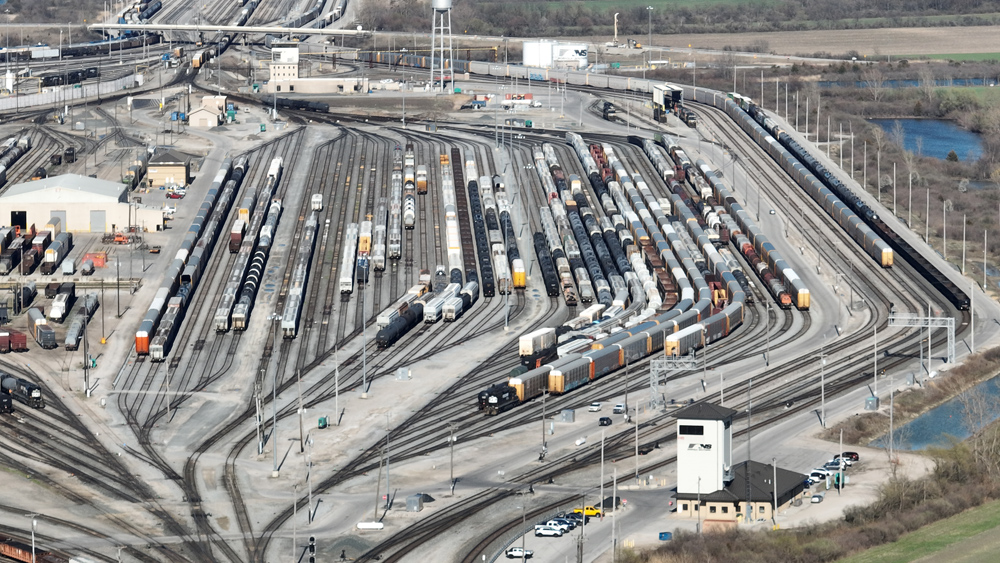
Freight
cars gather in Norfolk Southern’s Moorman Yard in Bellevue, Ohio, where
there’s excess capacity in the hump yard’s classification bowls. Joe
Zadeh
Let’s assume regulators approve the historic deal — and that Omaha
doesn’t screw it up with technology or operational snafus. A
transcontinental Union Pacific should gain volume merely by offering
true coast-to-coast, single-line service. Intermodal, for example, wins
more market share when just one railroad handles the load. So it’s
likely we’ll see a one-time growth spurt, perhaps even a sizeable one.
But then what? We’re right back where we started, unable to grow and bleeding volume to trucks.
The 52,215-mile UP — and an
eventual, inevitable BNSF+CSX rival — will still be under intense
investor pressure to maintain a low operating ratio, whether it’s Wall
Street or Berkshire Hathaway applying the thumbscrews. Eliminating
interchange in Chicago won’t fix this. And so transcon mergers simply
kick the can down the road.
UP will harvest the low-hanging fruit, only to eventually run smack
into the same obstacle railroads have been facing since volume peaked in
2006. Wall Street demands fat profit margins and doesn’t care whether
railroads are growing or taking trucks off the highway.
Trains Columnist Bill StephensThat’s
because real growth requires service investments — more crews, more
locomotives, more marketing and sales people — and those costs push up
the almighty operating ratio in the short term, which Wall Street
punishes. A railroad that strays outside the operating ratio box, no
matter how briefly, soon finds activist investors at its doorstep.
And so a low operating ratio and growth are incompatible. An
exception would be in Western Canada, where bulk traffic sprouts like
weeds and can’t move to port without Canadian National and Canadian
Pacific Kansas City locomotives on the point of unit trains of covered
hoppers or tank cars.
In the truck-competitive U.S. of A., however, taxpayer-supported
interstates parallel every major main line, and railroad volume growth
has been anemic. A transcontinental merger does nothing to change the
eventual outcome of trucks carrying the day — and the freight — if
railroads continue with business as usual. UP+NS is a temporary
Band-Aid, at best.
To truly flourish — that is, make a decent buck while hauling more
tonnage — the U.S. Class I railroads need a new game plan. One that goes
beyond mergers and tackles the service and reliability gap that keeps
the truckers’ trailers full.
📺 Discover How to Skyrocket
Your Video Views on YouTube!
🟥 UNLOCK AMAZING FREE TOOLS For Your
YouTube Channel To Boost Views: Tubebuddy (Your Growth Secret on
YouTube): https://www.tubebuddy.com/MR77100
💠 SHOW YOUR SUPPORT VIA
PAYPAL!
https://www.paypal.com/cgi-bin/webscr?cmd=_s-xclick&hosted_button_id=54AM4YW9QTFDYhosted_button_id=54AM4YW9QTFDY
https://youtu.be/Ov2aYvEYuiE?si=Am7xZ1ix13esmYQl&t=20
===============================================================================
💲RAILROAD INVESTMENTS💲:
💰 https://get.stash.com/markd8uyn 💰
💰
https://join.robinhood.com/marke833 💰
🌈 BRIGHTEN UP WITH COLOR DSLR
FILTERS https://geni.us/colofilters
🌞 POWER UP WITH A Solar Charger!
https://geni.us/nvGYL
=============================================================================
Watch as a magnificent westbound BNSF stack train glides over the CN
diamonds at Wellsboro. The power features a GEVO, Tier 4, and two GE
C44-9Ws!
===============================================================================
GEVO: 8104 Tier 4: 3873 C44-9W: 4858 C44-9W: 4180 Captured on 6.7.19
DIVE INTO OUR BNSF PLAYLIST! ☛▶️
https://youtube.com/playlist?list=PLaBqtxbEoDQZIR1feVHJizGgjuaOUhr4o&si=pGAWlasht6xCnKYQ


 / @hotrailproductions
  / hotrailproductions456